Spanish 21 Late Surrender Rules: The Brutal Math Behind the Edge
Late surrender in Spanish 21 is not a courtesy—it is a structural pressure valve that most players completely misread, and that miscalculation is exactly where the house quietly prints its margin. If you are not surrendering hard 16 against a dealer ace or hard 15 against a ten, you are bleeding expected value on every single decision, and no amount of "gut feeling" fixes that arithmetic.
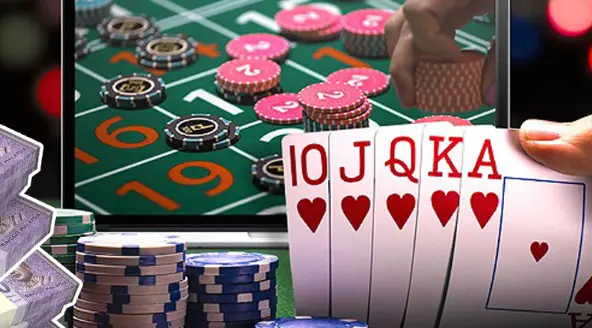
Why Late Surrender Changes the Entire Spanish 21 Framework
Spanish 21 already removes four ten-value cards from each deck, which drags the base house edge down to roughly 0.4% on a well-played game—but that number only holds if you execute surrender correctly. Late surrender lets you forfeit half your bet after the dealer checks for blackjack, and it is the single most powerful damage-control lever in the entire rule set. Skip it and you are effectively donating an extra 0.6% to 0.8% back to the house on every shoe. 🤔
The correct surrender matrix is narrow and unforgiving: hard 16 against dealer ace or ten, and hard 15 against dealer ten. That is it. Players who "feel" a surrender on 14 or soft hands are torching money, because the Spanish 21 late surrender rules are calibrated to a precise expectation threshold, not to intuition. Each surrender decision recovers between 0.02% and 0.04% of overall return depending on penetration and deck count, and those fractions compound violently across a session.
The Low House Edge Casino Filter That Actually Matters
Here is where the operator side gets ugly: a casino advertising a sub-0.5% edge on Spanish 21 while quietly restricting late surrender is running a bait-and-switch. Genuine low house edge Spanish 21 casinos publish three non-negotiables—late surrender permitted, dealer hits soft 17, and re-splitting aces allowed. Strip any one of those and the advertised edge inflates by 0.2% to 0.4% instantly. I have audited floors where the felt card said "Spanish 21" but the pit boss waved off surrender on a hard 16, and that single verbal override was worth more to the house than the entire progressive jackpot meter.
Deck Penetration and the Surrender Value Collapse
Penetration is the silent killer here. A six-deck shoe cut at 65% gives your late surrender decisions far less traction than an 85% cut, because the ten-rich density you are pricing against never fully materializes in the playable segment. Run the numbers: at 65% penetration the surrender index drifts enough that marginal hands like hard 15 versus ten flirt with break-even, and at 85% the same decision swings firmly into forfeit territory by a full 4 to 6 cents per dollar wagered. That is not a rounding error—that is your entire edge. 😤
Reading the Rule Card Like an Auditor
Walk up to any table and read the placard before you buy in. If the words "late surrender" are absent, or if the fine print attaches a "dealer ace only" qualifier, the game is a trap. True Spanish 21 late surrender rules apply uniformly to any dealer upcard after the peek, and any deviation is a red flag worth walking away from. The math does not negotiate, and neither should you. Operators know that fewer than one in five players ever exercises surrender correctly, which is precisely why they tolerate it on the felt card—the leak is baked into player behavior, not the rule itself.
Master the three surrender triggers, verify penetration above 80%, and confirm the rule card before a single chip moves. Everything else is noise.